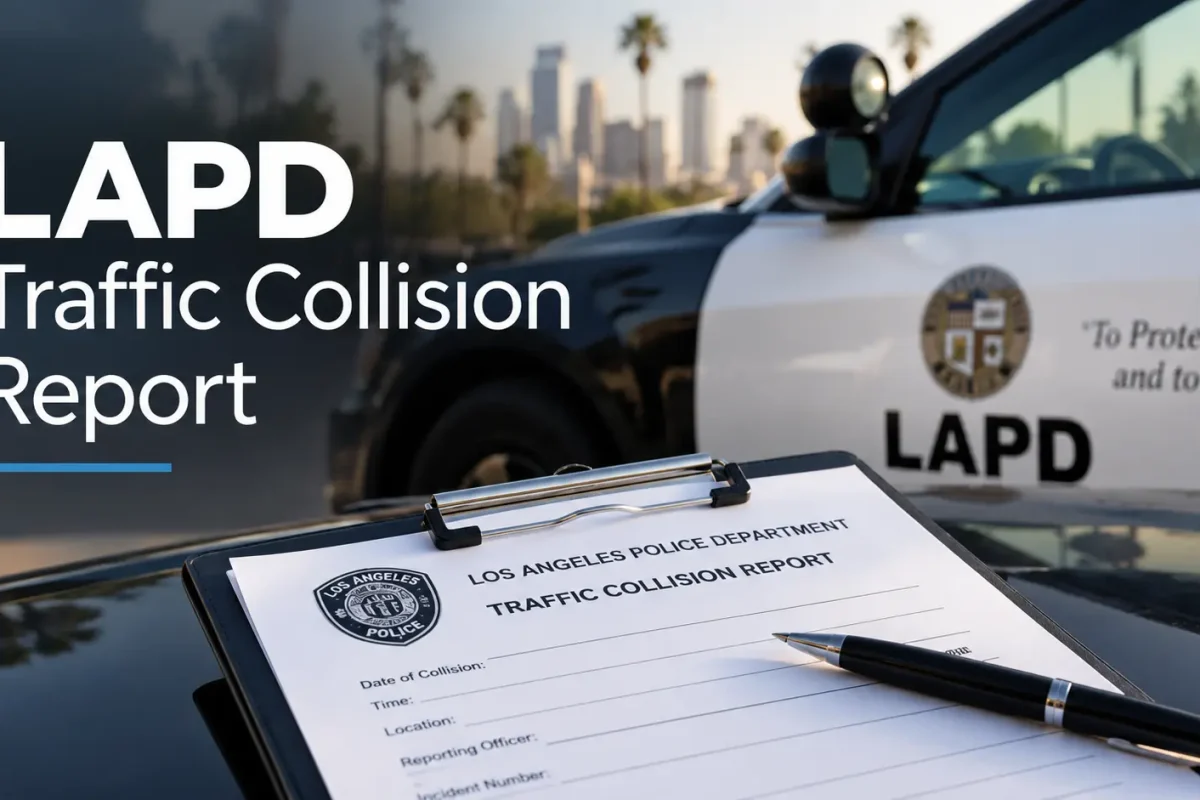
Key Takeways: You can get an LAPD traffic collision report online through LAPD’s LexisNexis portal at least 45 days after the crash, or by mail for $19. Arrest, fatal, and juvenile reports are mail only. LAPD skips reports for many minor crashes, so you may need to report it yourself and file a DMV SR-1 within 10 days.
The tow truck is gone. Your car is sitting in a yard in Van Nuys, your neck hurts more today than it did yesterday, and the other driver’s insurance adjuster has already left you two voicemails. Somewhere in the middle of all that, someone tells you to “get the police report.” Easy to say. Less easy when you have never done it and the Los Angeles Police Department (LAPD) website sends you in three directions.
Here is how the process works, what you need before you start, and what to do when officers never showed up at all.
Who Can Request an LAPD Traffic Collision Report
Not everyone can pull a copy. LAPD releases collision reports to victims, their representatives, and the people listed in California Vehicle Code 20012. That section covers anyone with a “proper interest” in the crash, including:
- The drivers involved, and the parent or guardian of a minor driver
- Anyone injured in the collision
- The owner of a damaged vehicle or damaged property
- Anyone who may face civil liability for the crash
- An attorney who declares under penalty of perjury that they represent one of those people
If you hire a lawyer, your lawyer can request the report for you. LAPD’s FAQ page also says insurance companies must include a policy number with their request and attorneys must include an attorney release.
How to Get Your LAPD Traffic Collision Report
You have two routes. Which one you use depends on the type of crash and how old the report is.
Requesting the Report Online
LAPD runs online requests through a portal powered by LexisNexis, available in English and Spanish. The catch is timing. LAPD says to wait at least 45 days after the collision before you request it online, because the report has to be reviewed and approved for release first.
Online requests are not available for every report. You have to use mail if the report:
- Involves an arrest
- Involves a fatality
- Involves a juvenile
- Was issued before February 1, 2016
Requesting the Report by Mail
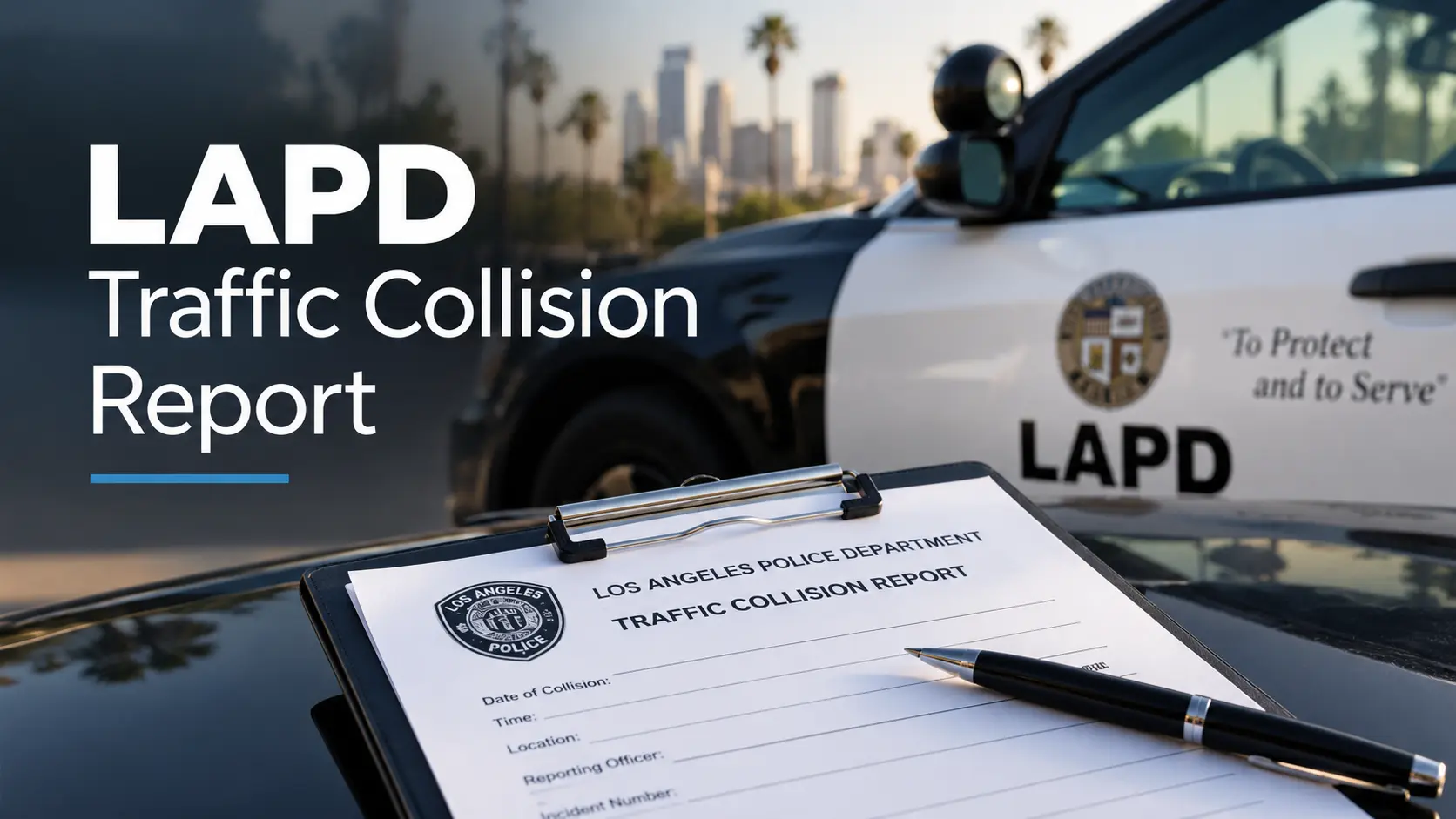
For a mailed request, fill out LAPD’s Traffic Collision Report Request Form and send it with a $19 check or money order made out to the Los Angeles Police Department. No cash. Mail it to:
Los Angeles Police Department
Records and Identification Division, Document Processing Unit
P.O. Box 30158
Los Angeles, CA 90030
To check the status of a mailed request, LAPD lists (213) 486-8130. Be patient. LAPD’s own guidance says there is a minimum two month delay before reports are available.
What You Need Before You Request It
The LAPD request form asks for the following information, and the table shows where to find each item.
| Information | Where to find it |
|---|---|
| LAPD DR number or incident number | The card or slip the officer handed you at the scene |
| Date, time, and location of the crash | Your phone photos, your insurance claim, the tow receipt |
| Names of the people involved | The information you exchanged at the scene |
| License plate numbers and registration states | Scene photos or the exchange of information |
| Your name, address, phone, and date of birth | You |
| Your interest in the report | Driver, passenger, injured person, owner, attorney |
You will also sign a declaration. If you lost the DR number, start with the officer’s business card, your 911 call, or your insurance claim notes. Your attorney can help track it down.
What If LAPD Never Came to Your Crash?
LAPD does not write a report for every collision. According to LAPD’s own guidance, if every driver has a valid license, nobody is hurt, and you exchanged information, LAPD will not complete a report for that crash. The same goes for hitting a parked car or object when you left a note.
LAPD tells drivers to call 911 when anyone is injured or a driver appears to be intoxicated. If nobody is hurt but it was a hit and run or the other driver was unlicensed, LAPD’s non-emergency line is 1-877-ASK-LAPD.
For some crashes, you can file the report yourself through LAPD’s Community Online Reporting Service. LAPD lists minor injury collisions where information was exchanged, and hit and runs, as types you can report online. To use it, the crash must have happened inside Los Angeles city limits, you must be 18 or older, and it cannot have happened on a state highway. You get a temporary number right away and an official report number by email, usually within about 24 hours.
One more thing people miss. If anyone was injured or killed, California Vehicle Code 20008 requires the driver to make a written report within 24 hours. That report goes to the California Highway Patrol (CHP) or, inside a city, to that city’s police department. Do not assume the paperwork takes care of itself.
Freeway Crashes Go to the CHP
Crashes on freeways and state highways are generally handled by the CHP, not LAPD. That is why LAPD’s online reporting excludes state highways. If you crashed on the 110 or the 405, your report is probably a CHP report. The CHP charges $10 for a report of 1 to 25 pages, and you request it in person at a CHP office or by mail using form CHP 190.
The DMV Report Most Drivers Forget
The police report and the DMV report are two separate things. California requires you to file an SR-1 with the California Department of Motor Vehicles (DMV) within 10 days in two situations: anyone was injured (even slightly) or killed, or property damage was over $1,000. The DMV says this is required in addition to any report made to the police, the CHP, or your insurance company. You, your insurance agent, broker, or legal representative can file it online or on paper.
Skip it and the DMV says your driving privilege will be suspended. That is a terrible way to start an injury claim.
Why the Report Matters for Your Injury Claim
Insurance companies request these reports too, and LAPD’s FAQ explains how they do it. A collision report usually includes the officer’s diagram, witness names, statements from the drivers, the conditions at the scene, and sometimes the officer’s opinion about what caused the crash. If a witness drove off before you got their number, the report may be the only place their name exists.
That is also why mistakes in the report hurt. A wrong plate number, a statement you never made, or a diagram that puts your car in the wrong lane can show up in every conversation with the adjuster. If you spot an error, contact LAPD and ask how to submit a correction or a supplemental statement, and put your version in writing. An attorney can push this for you and gather the photos, video, and witness statements that back you up.
The report is one piece of the case. Medical records, scene photos, and traffic camera footage fill in the rest. Our guide on what to do after a car accident in California walks through the rest of the first week. If the adjuster is already calling, read how to deal with insurance adjusters after an accident before you give a recorded statement.
Final Thoughts
Paperwork is the last thing anyone wants to deal with after a crash. Your body is sore, your routine is wrecked, and suddenly you are expected to know form numbers and filing deadlines. It is normal to feel behind.
Take it one piece at a time: the DR number, the request, the DMV form. Write down what you remember while it is still fresh, keep every receipt, and give yourself permission to rest while the slow parts of the process catch up.
Talk to Pyramid Legal About Your Los Angeles Car Accident
If you were hurt in a crash anywhere in Los Angeles, our team can request your collision report, review it for errors, and go after the insurance company while you focus on recovering. Pyramid Legal offers 24/7 direct access to an attorney, and you pay no fees unless we win. Visit our office at 500 S Grand Ave, Suite 1610, Los Angeles, CA 90071, call 818-946-0763, or learn more about our Los Angeles car accident lawyers.
Get a Free Case Evaluation Today
Not sure who caused the crash? See who is at fault in a rear-end collision in California.
This article is general information about California traffic collision reports. It is not legal advice about your specific matter and does not create an attorney-client relationship.
Frequently Asked Questions
Can I get my money back if LAPD has no report for my crash?
My crash happened in Pasadena or Glendale. Can I get the report from LAPD?
Can my insurance company get my LAPD traffic collision report on its own?
What if the LAPD collision report says the crash was my fault?
An officer’s opinion in a collision report is not a final ruling on fault. Insurance companies and courts weigh all the evidence, including photos, video, witnesses, and vehicle damage. California uses pure comparative fault, so sharing some blame reduces your compensation by your percentage of fault rather than eliminating it.