
Key Takeways: Uninsured motorist coverage in California pays for your injuries when the driver who hit you has no insurance, or when a hit-and-run driver cannot be found. Insurers must include it in every auto policy unless you decline it in writing. Strict rules apply: hit-and-runs must be reported to police within 24 hours, and claims must be acted on within two years.
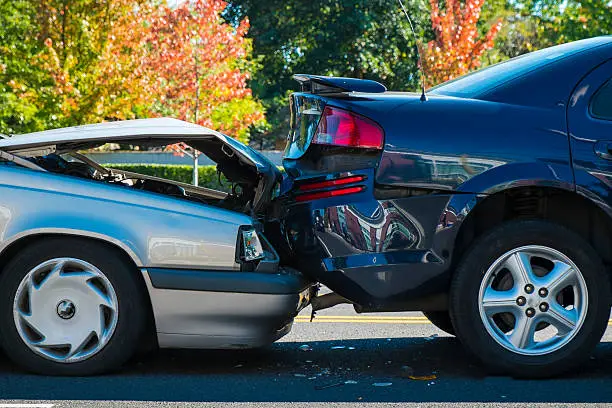
The other driver was apologetic at the scene. They handed you a name and a phone number, and then, quietly, admitted they did not have insurance. Or they never stopped at all. Either way, the person who caused your injuries has nothing to pay you with.
This happens far more often than people expect. The Insurance Research Council estimated that 20.4% of California drivers were uninsured in 2023, about one in five. The coverage that protects you in that moment is already in most California auto policies. Here is how to use it.
What Happens If Someone Without Insurance Hits You
You are not out of options. Your path usually runs through your own policy, but there are steps to take first.
First steps at the scene
- Call 911 if anyone is hurt, and get the police to the scene when you can.
- Get the other driver’s name, license, plate, and vehicle information, even if they say they have no insurance.
- Photograph the vehicles, the plates, and the road.
- Get medical care the same day, even if you feel fine.
- Stick to facts. Do not argue about fault or apologize at the scene.
Report it to the DMV
Under California Vehicle Code 16000, a driver involved in a crash with any injury, or more than $1,000 in property damage, must file an SR-1 report with the DMV within 10 days. A driver who cannot show insurance after a reportable crash faces a license suspension under Vehicle Code 16070, and driving uninsured carries fines under Vehicle Code 16029 of $100 to $200 for a first offense, plus penalty assessments.
Suing the uninsured driver personally
You can sue an uninsured driver directly. The hard truth is that many uninsured drivers have little to collect, which is why your own uninsured motorist coverage is usually the real source of payment.
How Uninsured Motorist Coverage Works in California
Uninsured motorist coverage, often called UM, pays for your injuries when the at-fault driver has no liability insurance. It steps into the shoes of the insurance the other driver should have had.
The law is often misunderstood. California does not require every driver to buy uninsured motorist coverage. Under Insurance Code 11580.2, insurers must include it in every auto liability policy, and you can only remove it by signing a specific written waiver. The California Department of Insurance puts it simply: your insurer must offer it, and if you choose not to buy it, you must sign a waiver. If you never signed one, you likely have it.
Your UM limits usually match your liability limits. California’s minimum liability limits are $30,000 per person and $60,000 per accident for injuries, plus $15,000 for property damage, for policies issued or renewed on or after January 1, 2025 (Vehicle Code 16056).
UM can also pay for car damage in limited situations. Under Insurance Code 11580.26, uninsured motorist property damage coverage pays up to the lesser of your car’s actual cash value or $3,500, and it requires an identified driver or vehicle.
Underinsured Coverage and the Offset
Underinsured motorist coverage, or UIM, helps when the at-fault driver has insurance, but not enough. It only applies after the at-fault driver’s liability limits are used up, and it is reduced by whatever that driver’s insurer paid you.
Worked example with a minimum-limits driver
Say a driver carrying California’s $30,000 minimum causes a crash that leaves you with $150,000 in damages. Their insurer pays its full $30,000. You carry $100,000 in UIM coverage.
UIM payment: $100,000 UIM limit − $30,000 already paid = $70,000
Total recovered: $30,000 + $70,000 = $100,000 of your $150,000 in damages
The remaining $50,000 would have to come from the driver personally. This is why the limits you choose matter as much as having the coverage at all.
Hit-and-Run Claims
A driver who flees is treated as uninsured, but Insurance Code 11580.2 adds strict conditions. To use your UM coverage after a hit-and-run:
- There must be physical contact between the other vehicle and you or your car.
- The crash must be reported to the police within 24 hours.
- You must file a statement with your insurer within 30 days showing you have a claim against an unknown driver.
Miss the 24-hour police report and an otherwise valid claim can be denied. If you are injured and cannot report it yourself, have someone call for you. Our guide on legal options after a hit-and-run covers what happens if the driver is found later.
The UM Claim Process: Arbitration and the 2-Year Rule
A UM claim is a claim against your own insurance company, but do not expect it to act like a friend. Your insurer now stands where the at-fault driver’s insurer would have stood, and it will evaluate fault and damages the same way.
Disputes go to arbitration
Under Insurance Code 11580.2, disagreements over whether you are entitled to recover, and how much, are decided by agreement or, if you cannot agree, by arbitration. That means a private arbitrator, not a jury, usually decides a contested UM claim.
The 2-year deadline
This is the rule that catches people. Within two years of the crash, you must do one of three things: file a lawsuit against the uninsured driver, reach an agreement with your insurer, or formally demand arbitration by certified mail. Simply having an open claim with an adjuster does not stop the clock.
If You Were the One Without Insurance: Proposition 213
California penalizes uninsured drivers when they are the ones hurt. Under Civil Code 3333.4, known as Proposition 213, an injured person who owned and drove an uninsured vehicle generally cannot recover non-economic damages, such as pain and suffering, even when the other driver caused the crash. Medical bills and lost wages are still recoverable. There is an exception when the at-fault driver was convicted of DUI for that crash.
How Much Coverage to Carry
The minimum limits rarely cover a serious injury. A single emergency room visit, surgery, or a few months off work can exceed $30,000 quickly. When you review your policy, check three things:
- That you have not signed a waiver removing uninsured motorist coverage
- That your UM and UIM limits match your liability limits, not the minimum
- Whether medical payments coverage is included, which helps with bills regardless of fault
If you ride in Uber or Lyft, note that California cut the uninsured motorist coverage rideshare companies must carry starting in 2026, which makes your own policy more important. Our breakdown of Uber accident settlements in California explains that change.
Final Thoughts
There is a particular unfairness in being hurt by someone who did not bother to carry insurance. You did everything right, and now you are the one dealing with the fallout. Take a breath before making any decisions. The coverage you have been paying for exists for exactly this moment, and understanding it is the first step toward getting what you are owed.
Pyramid Legal: Fighting Uninsured Motorist Claims in Los Angeles
If an uninsured or hit-and-run driver injured you in Los Angeles or anywhere in Southern California, our attorneys can protect your deadlines, handle the arbitration demand, and push your own insurer to pay what your policy promises. You get 24/7 direct access to an attorney and pay no fees unless we win. Visit our office at 500 S Grand Ave, Suite 1610, Los Angeles, CA 90071, call 818-946-0763, or learn more about our Los Angeles car accident lawyers.
Get a Free Case Evaluation Today
Not sure what your claim is worth? Read what sets a car accident settlement in California.
This article is general information about uninsured and underinsured motorist coverage in California. It is not legal advice about your specific matter and does not create an attorney-client relationship.
Frequently Asked Quesetions
Can I file an uninsured motorist claim and still sue the driver who hit me?
Yes. Filing a lawsuit against the uninsured driver within two years of the crash is one of the ways Insurance Code 11580.2 lets you preserve your uninsured motorist claim. You cannot collect the same damages twice, but pursuing both protects you while the claim is resolved.
Can I use uninsured motorist coverage if I was a passenger in someone else's car?
Possibly. Coverage depends on the policy wording, and a passenger may be able to claim under the driver’s policy, their own policy, or both. Because the answer turns on the specific policies involved, have an attorney review them before you assume there is no coverage.
Do I need a lawyer for an uninsured motorist claim?
Not always, but UM claims are adversarial even though they are against your own insurer. Disputes go to arbitration, the two-year deadline is strict, and hit-and-run claims have extra reporting rules. Many people talk to a lawyer at least once before the deadline approaches.
Does uninsured motorist coverage pay for pain and suffering?
Yes. Uninsured motorist bodily injury coverage pays the damages you could have recovered from the at-fault driver, which can include pain and suffering, medical bills, and lost wages, up to your policy limits. Proposition 213 limits pain and suffering if you were driving your own uninsured car.