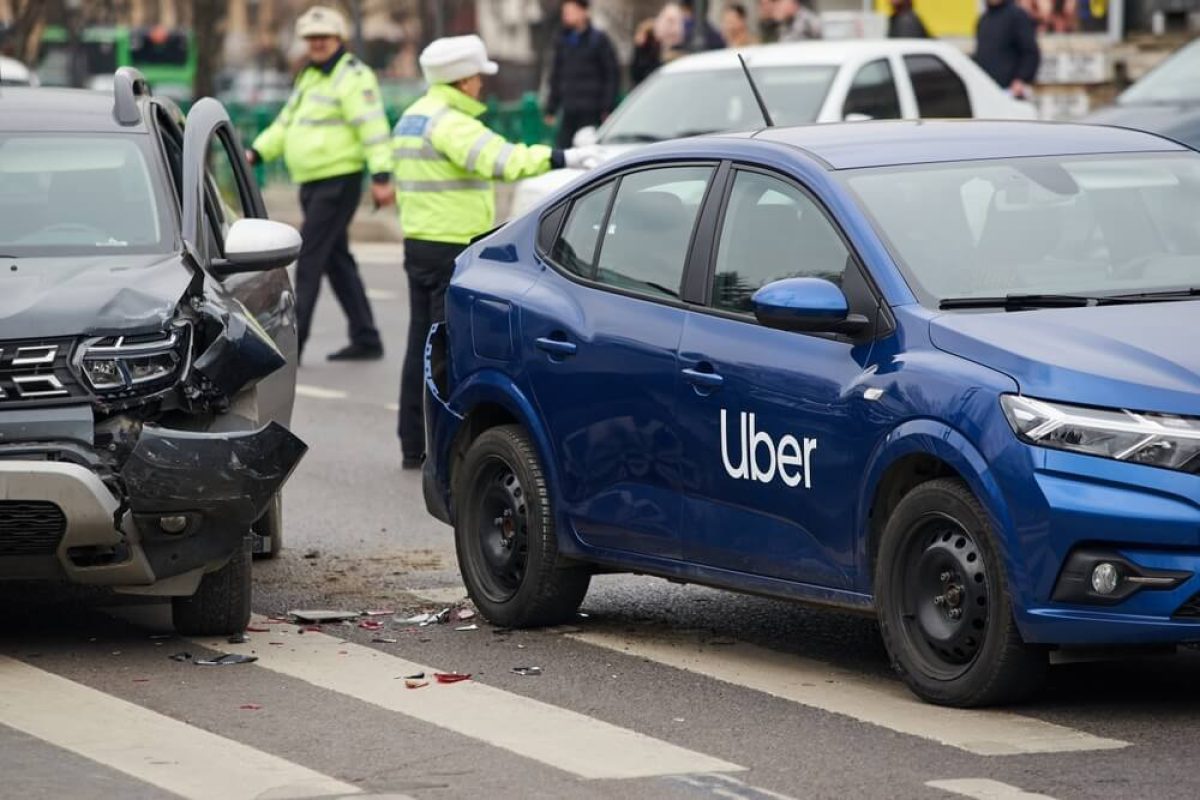
TL;DR: Can you sue Uber for an accident in California? Sometimes, but most injured people recover through the insurance Uber is required to carry rather than a lawsuit against Uber itself. California treats Uber drivers as independent contractors under Proposition 22, and Uber’s terms require arbitration for many rider claims. You can always pursue the at-fault driver.
The ride was supposed to be the safe choice. You did not drive because you were tired, or it was late, or you had a drink with dinner. Then the car you paid for ran a red light, and now you are wondering whether the billion-dollar company behind the app has to answer for it.
The honest answer is more complicated than most ads suggest. California law gives injured riders real protection, but it rarely comes from a lawsuit against Uber itself. Here is how it actually works.
The Short Answer: Claim the Policy, Sometimes Sue Uber
When an Uber driver causes a crash, there are usually three possible targets: the driver, Uber’s insurance, and Uber itself. Most injured people recover through the first two.
California Public Utilities Code 5433 requires rideshare companies to carry insurance that covers their drivers while they are working. Once a driver accepts a ride request and until the ride ends, that coverage includes $1,000,000 in liability coverage, and it is primary, meaning it applies first rather than waiting on the driver’s personal policy. While the driver is logged in and waiting for a request, lower limits apply. Our guide to who is liable in an Uber or Lyft accident breaks down each period.
So in most cases, “suing Uber” really means bringing a claim against the driver that Uber’s insurer defends and pays. That is a meaningful source of money. It is just not the same as holding Uber itself liable.
Reporting the crash in the Uber app does not count as filing a legal claim. It starts Uber’s internal process. It does not protect your legal deadline.
Why Uber Says Its Drivers Are Not Its Problem: Proposition 22
In 2020, California voters passed Proposition 22, now Business and Professions Code 7451. Under that law, an app-based driver is “an independent contractor and not an employee or agent” of the rideshare company, as long as certain conditions are met, such as the company not setting the driver’s hours or requiring them to accept particular rides. The California Supreme Court upheld Proposition 22 in Castellanos v. State of California in July 2024.
That matters because employers are usually responsible for their employees’ carelessness on the job. Uber will argue that, as an independent contractor, its driver’s negligence is not Uber’s legal responsibility. Proposition 22 does not touch the insurance requirement, though. The $1,000,000 coverage still applies during rides.
When Uber Itself Can Be a Defendant
There are situations where an injured person may have a claim directly against Uber for Uber’s own conduct, rather than just the driver’s. These are legal theories that depend heavily on the facts, not guaranteed outcomes.
Background check failures
California Public Utilities Code 5445.2 requires rideshare companies to run criminal background checks on drivers and bars drivers with certain recent convictions. If Uber allowed a driver on the platform who should have been disqualified, and that driver’s history connects to how you were hurt, a negligent hiring or retention claim may be possible.
Ignoring safety complaints
The California Public Utilities Commission requires rideshare companies to keep a zero-tolerance policy for drivers using drugs or alcohol and to suspend a driver after a complaint. A company that ignored prior complaints about a dangerous driver may face its own liability.
App and safety design
Some claims argue that the way an app pushes drivers to accept rides quickly or interact with their phones while driving contributed to a crash. These claims are newer and harder to prove.
The Arbitration Clause in Uber’s Terms
Before you picture a jury trial against Uber, know about the fine print. Uber’s U.S. Terms of Use, which riders accept to use the app, require binding arbitration for claims against Uber involving accidents that result in personal injury or death, with limited exceptions such as small claims and certain sexual assault or harassment claims.
In practice, that means a rider’s claim against Uber itself may go to a private arbitrator instead of a court. Whether that clause can be applied to a pedestrian, cyclist, or other driver who never agreed to Uber’s terms is far less clear, and Uber may still try to compel arbitration. The clause generally does not stop you from bringing a negligence claim against the driver or another at-fault motorist.
Suing the Driver and the Other Motorist
You can bring a claim against the Uber driver personally for negligence, such as speeding, running a light, or looking at the app while driving. When the driver was on a ride or heading to a pickup, the rideshare insurance responds to that claim.
If another driver caused the crash, your claim starts with that driver’s insurance. If that driver is uninsured or underinsured, the rideshare company’s uninsured motorist coverage may help. Since January 1, 2026, California requires that coverage at $60,000 per person and $300,000 per incident during rides, down from $1,000,000. Your own auto policy’s uninsured motorist coverage may also apply.
Expect finger-pointing. The Uber driver’s insurer, the other driver’s insurer, and sometimes your own insurer may each argue that someone else should pay. Identifying the driver’s app status at the moment of the crash usually settles which policy comes first.
Deadlines and Evidence That Disappear
Under Code of Civil Procedure 335.1, you generally have two years from the crash to file a personal injury lawsuit in California. If a city or public agency played a role, such as a city bus or a dangerous intersection, a government claim is due within six months under Government Code 911.2.
Rideshare evidence fades quickly, so act early:
- Screenshot the trip in the app, including the driver’s name, the vehicle, the route, and the time.
- Save the ride receipt and any messages with the driver.
- Photograph the vehicles, plates, and your injuries.
- Get names and contact details for witnesses and the other driver.
- Get medical care the same day, even if you feel fine.
Final Thoughts
There is something especially frustrating about getting hurt in a ride you paid for. You handed control to a stranger because it seemed like the responsible choice. Feeling let down by that is reasonable. What matters now is not who the biggest name in the story is, but making sure the right insurance answers for what happened to you.
Pyramid Legal: Taking On Rideshare Insurers in Los Angeles
If you were hurt in an Uber or Lyft crash in Los Angeles or anywhere in Southern California, our attorneys can pin down the driver’s app status, identify every policy, and decide whether a claim against the company itself makes sense. You get 24/7 direct access to an attorney and pay no fees unless we win. Visit our office at 500 S Grand Ave, Suite 1610, Los Angeles, CA 90071, call 818-946-0763, or learn more about our Los Angeles Uber and Lyft accident lawyers.
Get a Free Case Evaluation Today
Wondering what a rideshare claim is worth? Read our guide to Uber accident settlement amounts in California.
This article is general information about claims against Uber and its drivers in California. It is not legal advice about your specific matter and does not create an attorney-client relationship.
Frequently Asked Questions
Can I sue Uber if my driver was drunk or high?
You can bring a claim against the driver, and the rideshare insurance applies during the ride. A claim against Uber itself may be possible if Uber ignored prior complaints, because the California Public Utilities Commission requires rideshare companies to suspend drivers after drug or alcohol complaints. Report the driver to Uber and, if needed, the CPUC.
Can I sue Uber in small claims court?
Uber’s terms list small claims as an exception to arbitration, so a small claim may be possible. Small claims court has a low dollar limit compared with most injury claims, though, and filing there means giving up anything above that limit. Serious injuries usually belong in a regular claim.
Does Uber's insurance cover me if I was the Uber driver and got hurt?
Uber’s liability coverage protects other people from the driver’s mistakes, not the driver’s own injuries. If another driver caused the crash, an injured Uber driver can claim against that driver’s insurance, and Uber provides occupational accident insurance to California drivers under Proposition 22.
What if my Uber driver did not have the app on when the crash happened?
If the driver was offline, the rideshare insurance generally does not apply and the claim goes through the driver’s personal auto policy. That is why the trip record matters. If you were in the car as a paying rider, the app was almost certainly on, which brings in the $1,000,000 coverage.