
TL;DR: Who is liable in an Uber accident depends on who caused the crash and what the driver was doing in the app at that moment. If the rideshare driver was at fault, coverage runs from their personal policy when offline, to limited rideshare coverage while waiting, to $1,000,000 once a ride is accepted.
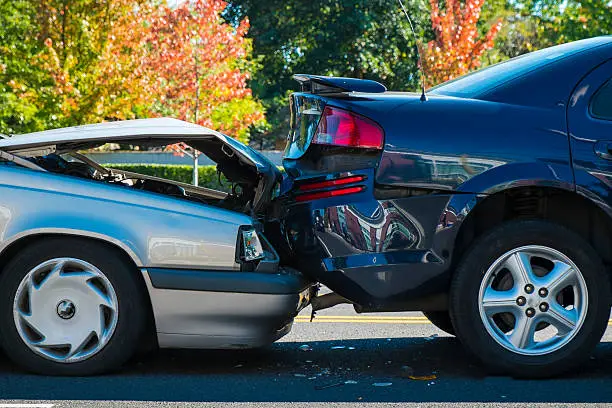
A rideshare crash has more moving parts than an ordinary fender bender. There is the rideshare driver, the company behind the app, at least one other driver, and a stack of insurance policies that each say someone else should go first. Ask “who is liable” and you will get a different answer from every adjuster you talk to.
California law does have a clear structure. It starts with one fact: what the rideshare driver was doing in the app at the moment of impact.
Liability Starts With the App Status
California Public Utilities Code 5433 sets the insurance Uber, Lyft, and other rideshare companies must carry, and the amount depends on the driver’s status in the app.
| Driver’s app status | Rideshare liability coverage | Uninsured/underinsured motorist coverage |
|---|---|---|
| App off | None. The driver’s personal auto policy applies | Driver’s personal policy only |
| Logged in, waiting for a request | $50,000 per person, $100,000 per incident, $30,000 property damage, plus at least $200,000 excess | Not required by the statute |
| Ride accepted, through the end of the ride | $1,000,000 | $60,000 per person, $300,000 per incident (since Jan 1, 2026) |
App off
When the driver is not logged in, they are just another driver. Only their personal auto insurance applies, and personal policies often exclude commercial driving, which is why insurers fight hard over whether the app was really off.
Logged in and waiting
Once the driver logs in, the rideshare coverage applies at lower limits. Under the statute, this coverage is primary, so the injured person does not have to wait for the driver’s personal insurer to deny the claim first.
Ride accepted through drop-off
From the moment the driver accepts a request until the ride ends, the $1,000,000 coverage applies, along with uninsured and underinsured motorist coverage. That uninsured coverage dropped from $1,000,000 to $60,000 per person on January 1, 2026, which matters if an uninsured driver hits your rideshare.
Who Can Be Liable
The rideshare driver
The driver is responsible for their own negligence: speeding, running lights, unsafe lane changes, or looking at the app while moving. The rideshare insurance usually pays that claim during working periods.
Uber or Lyft
Under Proposition 22 (Business and Professions Code 7451), app-based drivers are generally independent contractors, not employees, so the companies argue they are not automatically responsible for a driver’s mistakes. A company can still face claims for its own conduct, such as failing to run required background checks under Public Utilities Code 5445.2 or ignoring complaints under the California Public Utilities Commission’s zero-tolerance policy for impaired drivers, which requires the company to suspend a driver after a drug or alcohol complaint.
Another motorist
If another driver caused the crash, that driver and their insurer are responsible, whether you were a passenger, the rideshare driver, or someone else on the road.
A vehicle maker or a public agency
A defective part can bring in the manufacturer. A broken traffic signal or dangerous road design can bring in a city, county, or state agency, which requires a government claim within six months under Government Code 911.2.

Who Pays: Common Crash Scenarios
- Your Uber driver caused the crash during your ride. The rideshare company’s $1,000,000 liability coverage responds to your claim.
- Another driver hit your Uber during your ride. That driver’s insurance pays first. If they are uninsured or underinsured, the rideshare uninsured motorist coverage, $60,000 per person, and possibly your own policy can help.
- A rideshare driver hit you while waiting for a request. The lower waiting-period limits apply: $50,000 per person and $100,000 per incident, plus excess coverage.
- A rideshare driver hit you while offline. Only the driver’s personal policy applies.
- A road defect caused the crash. A claim against the public entity responsible, with the six-month government claim deadline.
If you are trying to figure out what any of these claims is worth, our guide to Uber accident settlement amounts in California explains the factors that move the number.
How Shared Fault Works in California
Many rideshare crashes involve more than one careless driver. California uses pure comparative fault, adopted by the California Supreme Court in Li v. Yellow Cab Co. (1975). Each party’s share of the blame is assigned as a percentage, and anyone partly at fault, including the person who was hurt, has their recovery reduced by their own percentage rather than eliminated.
For passengers, this usually works in your favor. A rider in the back seat is rarely at fault for anything, so the fight is between the drivers and their insurers over who pays what share.
Why Insurers Fight Over the App Status
The difference between “offline” and “ride accepted” can be the difference between a $30,000 minimum personal policy and $1,000,000 in coverage, so insurers dispute it constantly. Common tactics include:
- Claiming the driver had logged off or had not yet accepted the ride
- Delaying while each insurer waits for the other to accept responsibility
- Asking for recorded statements to find inconsistencies about timing
- Arguing your injuries came from something other than the crash
Protecting Your Claim
- Screenshot your trip details right away: driver, vehicle, time, route, and status.
- If you were hit by a rideshare vehicle, photograph any Uber or Lyft trade dress on the car and ask the driver whether they were on a ride.
- Get the police to the scene, collect witness information, and photograph everything.
- Get medical care the same day.
- Do not give a recorded statement to any insurer before you understand which policy applies.
Final Thoughts
When several companies and insurers are involved, it is easy to feel like a file number passed from desk to desk. Your injuries are not a coverage dispute, even if everyone else is treating them like one. Keep your focus on getting better, and keep a record of everything, because the moment of impact is the fact everything else depends on.
Pyramid Legal: Untangling Rideshare Liability in Pasadena
If you were hurt in an Uber or Lyft crash in Pasadena or anywhere in Southern California, our attorneys can prove the driver’s app status, identify every responsible party, and make each insurer pay its share. You get 24/7 direct access to an attorney and pay no fees unless we win. Visit us at 1055 E Colorado Blvd, Suite 500, Pasadena, CA 91106, call 818-946-0763, or learn more about our Pasadena Uber and Lyft accident lawyers.
Get a Free Case Evaluation Today
Thinking about a claim against the company itself? Read can you sue Uber for an accident.
This article is general information about liability in Uber and Lyft accidents in California. It is not legal advice about your specific matter and does not create an attorney-client relationship.
Frequently Asked Questions
Is Lyft liable the same way Uber is?
Yes. California’s rideshare insurance and background check rules apply to every transportation network company, including Uber and Lyft. The same app-status periods decide which coverage applies, and Lyft drivers are generally treated as independent contractors under Proposition 22 just like Uber drivers.
Who pays if two rideshare vehicles crash into each other?
Each driver’s fault and app status are evaluated separately. If both were working, both companies’ rideshare policies may be involved, and California’s comparative fault rules divide responsibility by percentage. A passenger in either car can usually claim against whichever driver, or both, caused the crash.
Does the rideshare company's insurance pay for property damage?
Yes, within limits. During the waiting period, California requires at least $30,000 in property damage coverage. Once a ride is accepted, the $1,000,000 coverage applies to death, personal injury, and property damage combined, such as your vehicle if a rideshare driver hit you.
What if the rideshare driver gave me a different version of what happened?
Conflicting stories are common, and fault is not decided by whoever talks first. Photos, video from nearby businesses or dashcams, the police report, witness statements, and app trip data are what settle disputes about how a rideshare crash happened.