
Key Takeways: Comparative negligence in California follows a pure rule. If you were partly at fault for an accident, your compensation is reduced by your percentage of fault, but you can still recover something even if you were mostly to blame. Pain and suffering damages are split among defendants by fault, while medical bills and lost wages work differently.
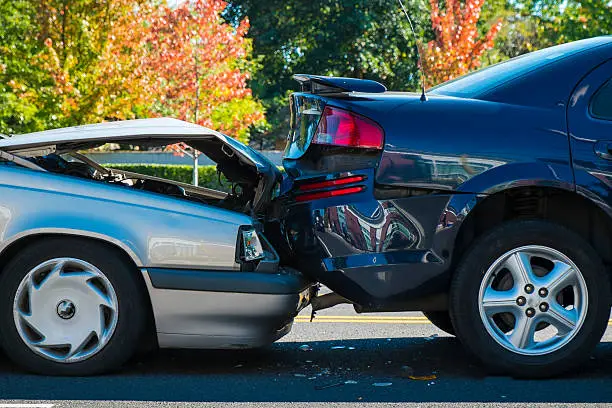
The adjuster was friendly on the first call. By the third call, the story had changed. You were going “a little fast.” You “could have braked sooner.” Suddenly a crash you did not cause is being described as half your fault, and the offer on the table has been cut to match. That move has a name: comparative negligence. Insurance companies lean on it because every percentage point of fault they pin on you comes straight off what they pay. Knowing how the rule actually works in California is the best defense against it.
Comparative Negligence in California: The Pure Rule
California follows pure comparative negligence. The California Supreme Court adopted it in Li v. Yellow Cab Co. (1975), holding that an injured person’s own negligence “shall not bar recovery, but the damages awarded shall be diminished in proportion to the amount of negligence attributable to the person recovering.” The same idea is written into California Civil Code 1714, which makes everyone responsible for injuries caused by their lack of ordinary care, while recognizing that a person who partly brought an injury on themselves shares the loss. In plain terms, your share of the blame reduces your compensation. It does not erase it. Your recovery: $100,000 in damages × (100% − 30% your fault) = $70,000 The rule holds at the extremes too. If a jury decides you were 90% at fault for a crash that caused $100,000 in damages, you can still recover the 10% the other driver owes. Your recovery at 90% fault: $100,000 × 10% = $10,000 That is why the fight over percentages matters so much. Every 10 points the insurer shifts onto you is 10% of your case.
Pure vs Modified vs Contributory Negligence
Not every state treats shared fault the same way. Here is how the main systems compare on a $100,000 claim where the injured person is found 60% at fault.
| System | How it works | Recovery at 60% fault on $100,000 |
|---|---|---|
| Pure comparative negligence (California) | Recovery reduced by your share of fault, never barred | $40,000 |
| Modified comparative, 50% bar | Barred if you are 50% or more at fault | $0 |
| Modified comparative, 51% bar | Barred if you are 51% or more at fault | $0 |
| Contributory negligence | Any fault at all bars recovery | $0 |
California uses only the pure rule. If you read online that California has “two types” of comparative negligence, or that being more than half at fault ends your case here, that information is wrong.
How Fault Is Split Between Multiple Defendants
Many crashes involve more than one at-fault party: two drivers, a driver and a trucking company, or a driver and a city that ignored a broken signal. California splits their responsibility differently depending on the type of damages.
Proposition 51, now Civil Code 1431.2, says each defendant’s liability for non-economic damages, such as pain and suffering and emotional distress, is several only. Each defendant pays its own percentage and no more. Economic damages, such as medical bills and lost wages, stay joint and several, so you can collect the full amount from any defendant found liable. Here is how that plays out. Say you were not at fault at all, your economic damages are $80,000, your non-economic damages are $120,000, and the jury puts Driver A at 70% fault and Driver B at 30%.
Economic damages: the full $80,000 can be collected from Driver A or Driver B Driver A non-economic share: $120,000 × 70% = $84,000 Driver B non-economic share: $120,000 × 30% = $36,000 If Driver B has no insurance and no assets, Driver A still owes the full $80,000 in economic damages but only its own $84,000 share of pain and suffering.
The $36,000 assigned to Driver B may never be collected. That is one reason a thorough investigation of every responsible party matters before a case settles. The jury instruction California courts use, CACI 406, also lets jurors assign fault to people who are not even in the lawsuit. The percentages must add up to 100%, and every point given to an absent party is a point no defendant in the room has to pay for.
Fault Arguments Insurers Use in California Car Crashes
Adjusters have a playbook for shifting blame. These are the arguments that come up most in California crash claims.
The seatbelt defense
If you were not wearing a seatbelt, expect the insurer to raise it. Under California’s jury instruction CACI 712, the defense has to prove four things: a working seatbelt was available, a reasonable person in your position would have used it, you did not, and your injuries would have been avoided or less severe if you had. Even when the defense proves all four, the result is a reduction, not a bar.
Driving without insurance: Proposition 213
Proposition 213, now Civil Code 3333.4, is not technically a fault rule, but insurers raise it constantly. If you were driving your own uninsured vehicle, could not show financial responsibility, or were convicted of driving under the influence in connection with the crash, you generally cannot recover non-economic damages such as pain and suffering. You can still recover economic damages like medical bills and lost wages. There is an exception: an uninsured owner hit by a driver who was convicted of DUI for that crash can still recover non-economic damages.
Speed, distraction, and following distance
Insurers also comb phone records, dashcam video, and crash diagrams for anything that suggests you were speeding, distracted, or following too closely. California Vehicle Code 21703 requires drivers not to follow more closely than is “reasonable and prudent,” and Vehicle Code 22109 bars stopping suddenly without signaling when there is an opportunity to signal. Either section can be turned against the driver who violated it. The answer is evidence, gathered early.
Who Decides Your Percentage of Fault
Most claims settle, so the first person to assign fault is usually an insurance adjuster. That number is an opening position, not a ruling. It is negotiable, and it is often wrong. If the case goes to trial, a jury decides. Under CACI 405, the defense carries the burden of proving that you were negligent and that your negligence was a substantial factor in causing your own harm. You do not have to prove you were perfect. They have to prove you were not. The evidence that moves these percentages:
- Photos of the vehicles, the road, and the final resting positions.
- Traffic camera, business, and dashcam video.
- Independent witness statements taken while memories are fresh.
- Vehicle event data recorder information.
- Medical records tying each injury to the crash.
The same rule applies far beyond car crashes. Slip and fall cases, dog bite cases, and other injury claims all use pure comparative negligence. Our guide on what your car accident case is worth in California shows how a fault percentage feeds into the final number.
Final Thoughts
Being told a crash was partly your fault stings, especially when you were the one who ended up in the emergency room. It is human to replay the moment and wonder what you could have done differently. That reflection is healthy. It just should not be confused with legal blame, which is decided by evidence, not by the first story someone tells about you.
Pyramid Legal: Pushing Back on Unfair Fault in Pasadena
If an insurance company is trying to pin the blame on you after a crash in Pasadena or anywhere in Southern California, our attorneys can gather the evidence, challenge the percentages, and fight for every dollar you are owed. You get 24/7 direct access to an attorney and pay no fees unless we win. Visit us at 1055 E Colorado Blvd, Suite 500, Pasadena, CA 91106, call 818-946-0763, or see how our Pasadena car accident lawyers handle fault disputes. Get a Free Case Evaluation Today Hurt in a rear-end crash? See who is at fault in a rear-end collision in California.
This article is general information about comparative negligence in California. It is not legal advice about your specific matter and does not create an attorney-client relationship.
Is comparative negligence the same as comparative fault in California?
Yes. California courts, jury instructions, and insurers use the two terms interchangeably. Both refer to the pure rule from Li v. Yellow Cab Co., which reduces an injured person’s compensation by their percentage of fault instead of barring recovery completely.
Does a police report decide how much of the crash was my fault?
No. A police report may include an officer’s opinion about what caused a crash, but it does not set fault percentages. Insurers and, at trial, a jury weigh all of the evidence, including photos, video, witnesses, and vehicle data, before any percentage becomes final.
Does comparative negligence apply to slip and fall and dog bite cases too?
Comparative negligence applies to negligence claims in general, including slip and fall cases and most other personal injury claims. Dog bite claims under Civil Code 3342 follow a strict liability statute, so the defenses there are different, and an attorney should review the specific facts.
Can I be partly at fault even if the other driver got the ticket?
Yes. A traffic citation is evidence, but it does not automatically assign 100% of the fault. The other side can still argue you share some blame, for example through speed or distraction. Under California’s pure rule, any share they prove only reduces your recovery.